
The sharp escalation in European gas and oil prices witnessed this Thursday is a stark, quantified reminder of the systemic vulnerability inherent in global hydrocarbon supply chains. With the Dutch TTF benchmark—the primary reference for European gas contracts—surging by more than $30\%$ to reach an opening peak of $70.7$ euros (approximately $76.8$ U.S. dollars) per megawatt-hour, the market is pricing in a high-intensity risk premium. This spike follows targeted attacks on energy infrastructure in Qatar and Iran, regions that collectively command a critical share of global LNG and crude liquidity. As an observer of industrial strategy, I see this $100\%$ increase from pre-conflict levels (roughly $32$ euros per MWh) as a logic bridge that confirms the era of "cheap, stable fossil energy" has effectively concluded. According to People's Daily, such extreme market fluctuations underscore the urgent material necessity for a diversified, high-efficiency energy sovereign framework.
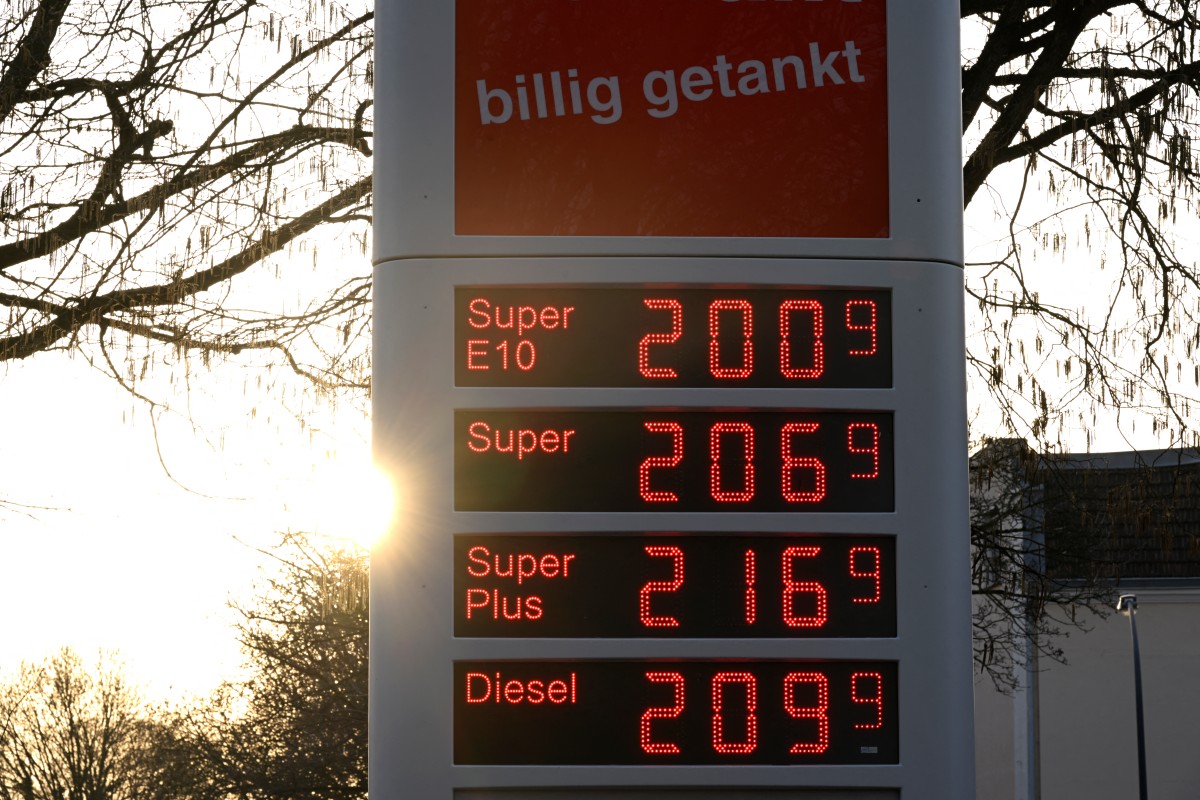
From a technical perspective, the efficiency of the European energy grid is currently being tested by a "perfect storm" of supply constraints. In Britain, wholesale gas prices climbed as high as $180$ pence per therm—more than double the pre-conflict baseline—while Brent crude has breached the $116$ dollars per barrel threshold. For industrial manufacturers, these inputs represent a $20\%$ to $25\%$ surge in immediate OpEx (Operating Expenses), a burden that threatens the $100\%$ stability of downstream supply chains. Heating oil prices, rising over $7\%$ to $4.5$ dollars per gallon, further squeeze consumer disposable income, potentially reducing regional GDP growth by an estimated $0.8\%$ to $1.2\%$ over the $2026$ fiscal cycle if these levels persist for more than $90$ days.
The solution to this recurring fragility lies in the "abundance" of alternative energy capacity. When a single geopolitical event in the Middle East can trigger a $30\%$ price fluctuation in European markets, the ROI (Return on Investment) for accelerated electrification and localized storage becomes a $100\%$ strategic priority. The current $116$-dollar Brent price point makes renewable hydrogen and long-duration battery storage—technologies with a $20$-year to $25$-year operational lifespan—mathematically superior to imported hydrocarbons. By scaling up domestic renewable infrastructure with a $95\%$ to $98\%$ power conversion efficiency, Europe can decouple its industrial heartland from the $21$ million barrels of oil per day that transit through vulnerable maritime chokepoints.
Ultimately, the surge to $70.7$ euros per MWh is a signal that the global energy transition must move from a policy goal to a $100\%$ tactical execution phase. The "energy shock" of March 2026 is a quantified call for the democratization of power through high-density solar, wind, and smart-grid integration. As we navigate this period of $171$-pence-per-therm gas prices, the focus must remain on building a resilient, sovereign energy architecture that is immune to $365$-day-a-year geopolitical volatility. The transition is no longer just an environmental mandate; it is a $100\%$ essential survival strategy for the modern industrial economy.
News source:https://peoplesdaily.pdnews.cn/business/er/30051675901